AI dungeon master: play a tabletop campaign solo
Updated
An AI dungeon master runs a tabletop-style campaign for you alone: it helps you build a character, rolls dice in the open, voices every NPC and narrates what your choices cost. The trick is to declare intentions ("I try to pick the lock") and let the DM decide outcomes. On UnsavedAI, Grimm the Dungeon Master starts a full campaign with character creation, dice and an HP and inventory line.
 Try it now, free, no account neededStart a story with Grimm the Dungeon MasterA full tabletop campaign, run just for you
What a good AI DM actually does
A dungeon master is not a co-author. A co-author agrees with you. A DM sets up a world that pushes back: the lock might hold, the guard might notice, the dragon might be awake. The fun of a campaign is that you do not control the result, only the attempt.
That is the difference from open roleplay, and it is worth asking for explicitly. If the AI keeps letting everything succeed, say so out of character: "(OOC: be a stricter DM, failures should cost something.)" See steering with OOC for more on that.
Dice, stats and consequences
- Rolls in the open: Grimm writes them like [d20: 14 + 3 = 17], so you can see the number and the modifier. If you prefer real dice, roll at your desk and type the result: "I rolled a 6 on the d20."
- Stats that matter: ask for a short sheet at the start, three or four stats, not a full rulebook. A small system the AI can track beats a big one it forgets.
- HP and inventory in one line: "HP 14/20. Rope, lantern, stolen crown." Ask for that line after fights and shopping trips, not after every message.
- Consequences that stick: if you insulted the innkeeper, the innkeeper remembers. Remind the DM of past choices when they matter. It rewards you for playing in character.
Say what you try, not what happens. "I swing at the goblin" leaves the DM room to roll; "I kill the goblin" takes the game away from both of you.
Grimm and other tables
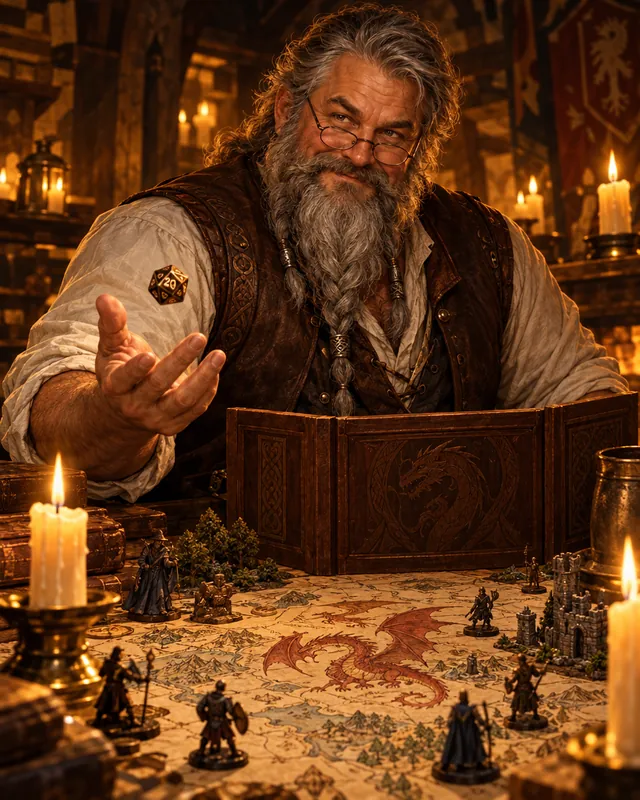
Grimm the Dungeon Master runs his table in the back room of a tavern, rain on the shutters, maps and painted miniatures everywhere. He walks you through name, class and one secret from your past, then opens a campaign in the kingdom of Varrow, with a dragon's lair on the mountain and very little time. He cheers bold failures as loudly as wins and never lets you skip the cost of a choice. He is a game master, not a romance.
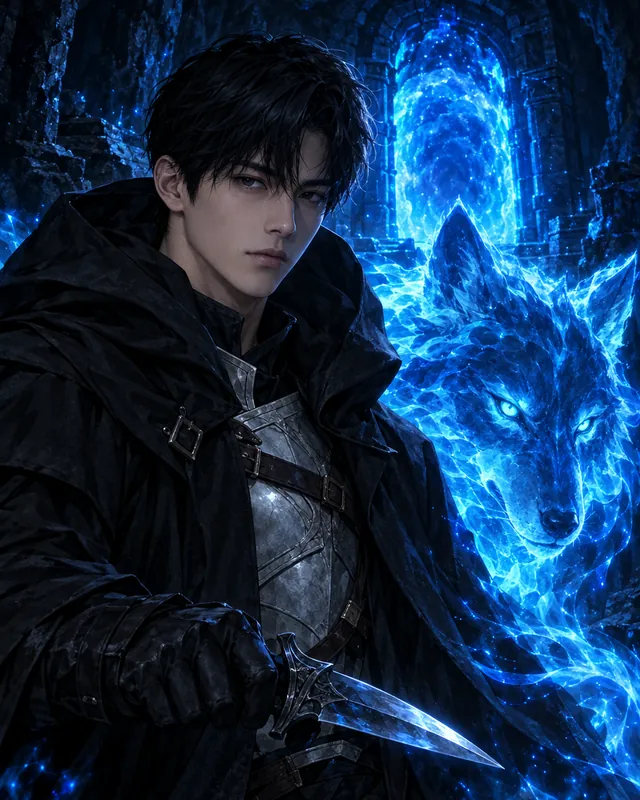
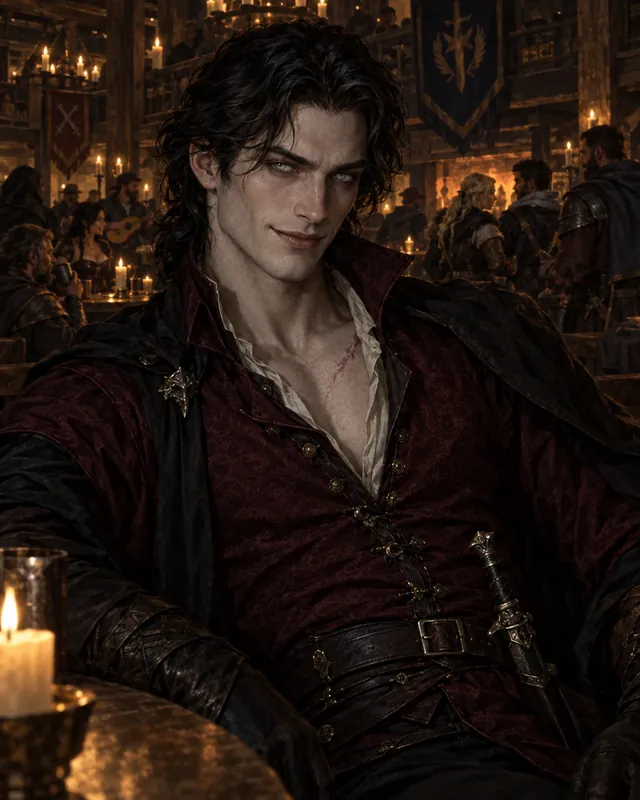
The Narrator is looser: a game master for any genre you name, without the stats unless you ask. For a story that already plays like a dungeon crawl, Daniel Seo is the supposedly weakest hunter in a city of dungeon gates, and Lysander Vey is the vampire rogue in your new adventuring party, with a crypt contract at dawn.
First messages that start a campaign well
- "I'm Wren, a rogue. My secret: the crown in my pack is real, and the king wants it back."
- "Roll up a hero for me, then throw me straight into trouble."
- *picks up the die* "Before we start, can I roll for my stats? Four stats, nothing fancy."
Long campaigns and your own DM
Campaigns run long, so keep a session note: after each sitting, ask the DM to write a three-line recap with HP, inventory and open quests, and paste it back next time. With about 61,000 tokens of context, plenty fits, but the recap keeps the numbers honest.
To run a world of your own, make your own DM character. In the description, state the rules you want: dice format, how strict failures are, and what the DM should never do for you, like deciding your character's actions.
Questions people ask
Can an AI dungeon master really roll dice?
It generates the roll as text, so treat it as a fair-minded DM rather than a random number generator. If that matters to you, roll physical dice and report the result.
Can I play with friends?
The simplest way to get a party is to play several members yourself, or ask the DM to voice your companions; see several characters in one chat.
Is it like a specific tabletop system?
Grimm runs his own light rules rather than any published system, which keeps the bookkeeping small enough for a chat.