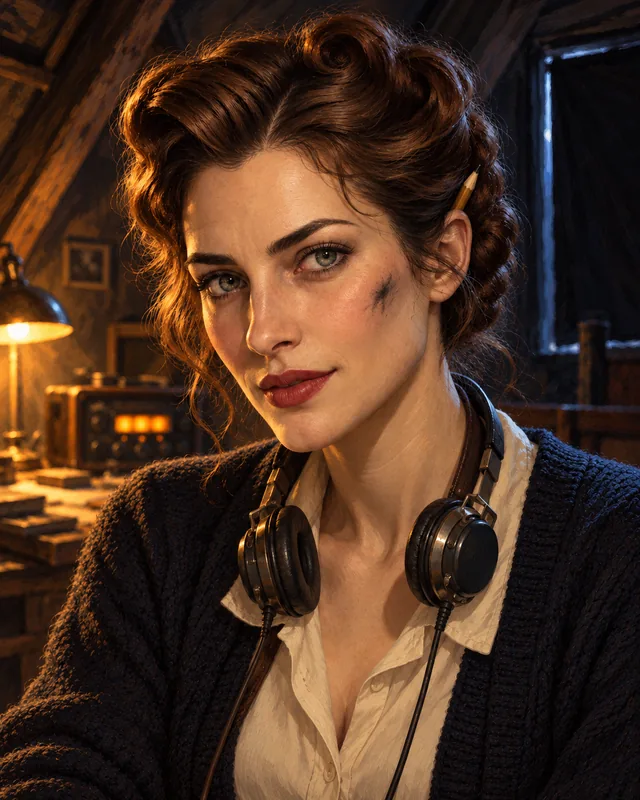
How to turn an AI roleplay into a readable story
Updated
Export the chat, cut it down to the scenes that carry the story, choose one point of view and tense, and turn *actions* and quoted lines into prose with dialogue tags. Then add what roleplay skips: transitions, setting and your own character's thoughts. Work one scene at a time. On UnsavedAI, Download this story in the ⋯ menu saves the whole conversation as a Markdown file with every line labelled by speaker.
 Try it now, free, no account neededStart a story with Della BrennanThe night editor shreds your story at 2 a.m. Then she stays until dawn helping you fix it.
Get the raw text out first
On UnsavedAI, open the ⋯ menu and choose Download this story. You get a Markdown file of the full conversation, each line labelled with who said it, which opens in any text editor or word processor. In SillyTavern, the panel that lists a character's saved chats can export one as a file. In apps without an export, copy the chat into a document in chunks.
Keep that file untouched and edit a copy. You will cut a lot, and it helps to be able to go back and find the line you deleted too early.
Cut to the spine
A roleplay log is a draft with the scaffolding still up. Before rewriting a single sentence, list the scenes in one line each: "Wren arrives at the newsroom", "Della shreds the draft", "the call from the councilman". Any scene you cannot summarise in a line that moves the story is a candidate for cutting.
- OOC notes and setup chatter. Fold anything important into narration; drop the rest.
- Abandoned branches. Rerolls and edits leave dead ends; keep only the path the story took.
- Repeated beats. Chats circle: three scenes of the same argument become one, with the best lines from each.
- Recaps and summaries you pasted in for the AI's memory. Readers do not need them.
- Greetings and sign-offs at the start and end of each session.
One point of view, one tense
Roleplay mixes voices. The character often speaks to "you", you write as "I", and actions sit in present tense between asterisks. Fiction usually picks one: third person past ("Della set the pages down") is the safe default, first person ("I watched her set the pages down") is more intimate. Convert the whole thing before polishing anything.
| In the chat | In the story |
|---|---|
| *She sets down the cup.* | She set down the cup. |
| "You're late." *her eyes narrow* | "You're late," she said, eyes narrowing. |
| *I shrug and sit.* | Wren shrugged and sat. |
| (OOC: skip to the next morning) | By morning, the rain had stopped. |
A small before and after
Chat, with Della Brennan, a night editor who covers drafts in red ink:
*Della slides the printout across the desk, red ink everywhere.* "Paragraph nine. That's your story. Why is it in paragraph nine?" *taps it* | *I lean over to look* "Because I wasn't sure it was true." | *She leans back, eyebrow raised.* "Then make sure. Then move it up."
Story: Della slid the printout across the desk. Red ink crawled down every margin. "Paragraph nine," she said. "That's your story. Why is it in paragraph nine?" Wren leaned over the page and felt her face go hot. She knew exactly why. "Because I wasn't sure it was true." Della sat back. "Then make sure. Then move it up."
The dialogue barely changed. What changed is the connective tissue: tags, one line of Wren's feeling, and the asterisks gone.
Add what roleplay leaves out
- Your own character's inner life. You knew what they felt; you rarely typed it. Add a sentence where it matters.
- Transitions. Chats jump; stories walk. A line of travel or time passing smooths each cut.
- Setting at the top of a scene, brief and specific.
- Variety. AI replies reuse gestures (narrowed eyes, a smirk, a breath let out). Search for them and keep one in five.
- Trim the ornament. Replies that pile on adjectives read heavier on the page than they did in chat.
If you use an AI for the rewrite, feed it one scene at a time with clear limits: "Rewrite this as third-person past-tense prose. Keep the dialogue that matters, cut repetition, add nothing that did not happen." Then edit its version by hand and read it aloud. The voice should end up yours, not the model's.
Questions people ask
Can I share or publish the finished story?
Your own writing is yours to share. If the story used a character someone else created, credit them and respect any wishes they have stated about their work.
Should I keep the second-person "you"?
Only if you want an unusual, intimate effect, as in an interactive-fiction style piece. Most readers find third or first person easier over a long story.
How much should I cut?
More than feels comfortable. A finished story is usually much shorter than its chat log, because rerolls, recaps and repeated beats all come out.