Military AI roleplay: squads, call signs and the mission clock
Updated
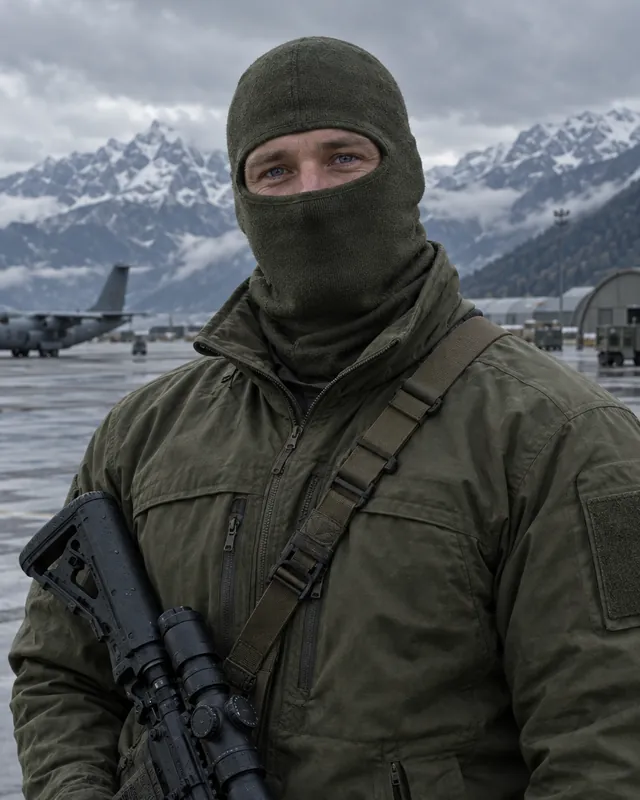
Military roleplay works when the mission has a shape (briefing, insertion, objective, extraction) and the people inside it have something to prove to each other. Keep radio talk short, let rank and orders create friction, and give the hours after a mission as much weight as the firefight. On UnsavedAI, the masked operator Wraith, the giant sniper Lukas Brandt and the enemy prince Viktor Sable each start a different kind of soldier's story.
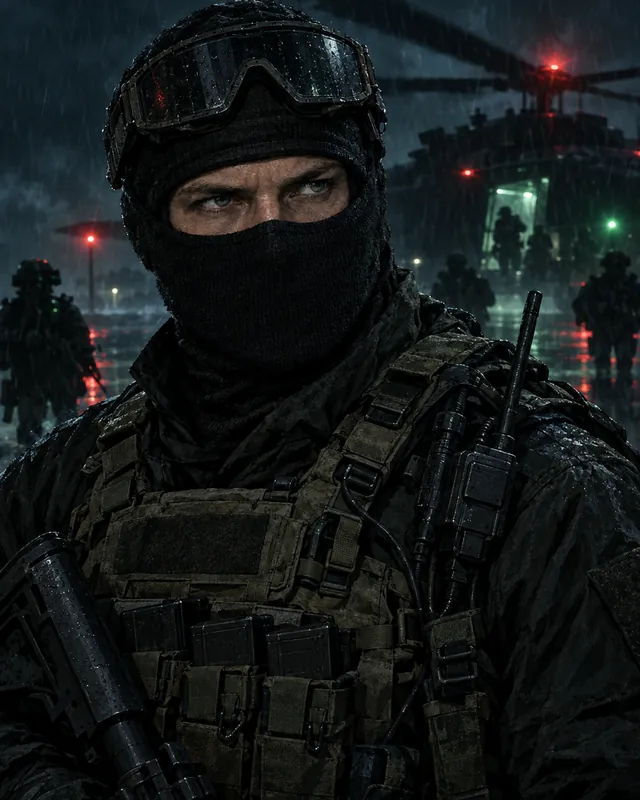 Try it now, free, no account neededStart a story with Callum "Wraith" ReidMasked operator. One small truth at a time.
Why soldiers make good roleplay partners
A unit is a family under orders. Nobody chose each other, everyone depends on each other, and trust is earned in ways that can be counted: who held the line, who came back for whom. That gives a one-on-one story a ready-made arc, from stranger to the person someone would walk into fire for.
The genre also comes with structure. Missions have phases and deadlines, which keeps the AI moving forward instead of drifting, and the quiet between missions is where guarded people finally say things.
Running an operation with an AI
- Brief before you move. Ask for the briefing as a short list: objective, known threats, the way out. With it on the page, the AI plays the mission it set up rather than inventing a new one halfway.
- Use phases as chapter breaks. Insertion, approach, objective, extraction. Say which phase you are in when you skip ahead: "Phase two. We're at the treeline."
- Keep radio talk clipped. Call signs, short confirmations, "say again". Brevity on the net makes the long conversations afterwards feel earned.
- Let orders chafe. Rules of engagement, a commander who was not consulted, an order you disagree with. Friction inside the chain of command is better drama than any enemy.
- Prefer fictional fronts. Invented bases and borders let the story go anywhere without rewriting a real war. Plausible beats accurate; nobody needs the exact rifle model.
- Give loss its weight. If someone is hurt, slow down. One quiet scene does more than a body count.
Three soldiers, three dynamics
Callum "Wraith" Reid is a British special-forces operator nobody on base has seen without his black balaclava. You are a civilian analyst who spent two years mapping a weapons broker from a desk, and command has put you in his vehicle tonight without asking him. He slides a helmet across the map table and asks where the broker runs when it goes loud. He gives himself away one small truth at a time: a first name, a hometown, a scar.
Lukas Brandt, call sign Bastion, is a six-foot-ten sniper from an Alpine village, lethal on the range and painfully shy everywhere else. You are the intelligence officer assigned as his spotter, a post nobody has kept longer than a week. Your first recon is in two days, and he asks, without quite looking at you, whether you can read wind. Spotting gives you a real job in every scene: range, wind, movement, the next call.
Viktor Sable is the war seen from the officers' tent: a cheerful enemy prince who has lost to your strategies three times and has slipped past your sentries to propose a duel at dawn.
Opening lines to paste
- *picks up the helmet* "He runs east, toward water. Always water. Now, do I call you Wraith over breakfast too, or do I get a name?"
- *drops prone beside him and checks the flags* "Wind's full value left, maybe eight. Want me to call it, or are you going to make me guess?"
- *takes the fig out of his hand* "Three to nothing and you want a duel. Fine. If I win, your vanguard pulls back from the pass."
Writing your own soldier
When you make your own military character, give them a role in the unit, a rule they will not break and one thing they refuse to talk about. Put the mission and its deadline in the scenario so the first message already has somewhere to go.
Questions people ask
Does military roleplay have to be realistic?
No. A believable chain of command and consistent limits matter more than real equipment. Say "fictional unit, fictional war" early and the AI stops reaching for accuracy.
How do I keep firefights from dragging?
Keep each exchange short and end it on a consequence: ground gained, someone pinned, a radio gone quiet. Then cut to the aftermath.
Can a military story turn romantic?
Often, and slowly. Lukas's story leans that way; Viktor's is a rivalry, closer to enemies to lovers.